“I boarded a crowded train with a group of colleagues; we journeyed
through the train looking for places; there wasn’t a place for all of us
to sit down" Jeremy Corbyn.
Yes there was but you all wanted to sit together. It is a train, not a Tardis. Other people may get on it first and tend to dot themselves about. The consequence is that it is unreasonable to expect to turn up on an open ticket and get seating in exactly the configuration you wish, especially if you are travelling as a group. This also applies at theatres, cinemas, buses, tube trains and your doctor's waiting room.
It is ludicrous that a grown man has a tantrum - wah, wanna sit wiv me mates, wanna magic train wot expands to make a magic office for me - and still expects to lead the Opposition. The correct response would be to stick him on the naughty step and tell him to learn to behave properly if he wants to be taken seriously.
People who wish to sit together have the option of pre-booking a seat. If you do not have online access, the booking office will help. The later you leave it, the less likely you are to be able to sit with your friends. On an open ticket you take your chance with whatever is available.
Q. If you and your mates get on a train without having booked seats together, how likely is it that the train guard will shuffle everyone else around in order to get you a special magic snowflake office?
A. Quite high if you are the leader of the Labour Party. Jezza accepted special treatment and even tried to pretend that he did not.
Having provided that special treatment for Corbyn's administratively incompetent staff, the least Virgin could have expected was a 'thank you'. Instead, they got a misleading piece of propaganda which was suspiciously pre-cooked as the film maker was there.
It takes a lot to make me sympathetic towards Richard Branson, but Corbyn managed it.
Thursday 25 August 2016

Tuesday 5 July 2016
The Stages of Adjustment
The stages to adjustment are, approximately: Shock, Anger, Denial,
and eventually..... Adjustment
It is not clear where we are as a society at the moment, but it looks like denial.
During this stage it is to be expected that things will be rocky. It is the most dangerous stage because there is a real possibility that unnecessary damage can be inflicted on oneself by cannoning around randomly. Yet none of this was un-foreseeable.
Indeed, Peter Hain (saints preserve us) foresaw it, as was noted on this very blog in February 2014. He wrote:
It goes beyond Europe and even beyond immigration. Some of it is plain bigotry. A lot of it is deep, deep antagonism to the political class, of which all the major parties are part. Under New Labour – and it has still not been wiped away - there has been a big disillusionment with us as a party among white working class traditional Labour supporters.”
Had the BBC been doing its proper job as the broadcaster in the national interest, it would have been picking up this thread. Instead, it did then as it does now, and tries to patronize the subject away.
In its current frenzy to prove that it was right and everything is going to be horrible, and how dare you squalid little oiks challenge our might and refuse to watch our crummy Top Gear after we've paid a fortune for an aging DJ and an affable American, the BBC has forgotten one thing:
I am not suggesting the BBC babbles like a lunatic PR trying to talk up duff products. But I am suggesting that it might want to have a drink of water, wash its tear-stained face, and start remembering that it is Us it is answerable to.
That includes apologising to people who were told that this was just a little local difficulty, no big deal, they should just ignore it and shout 'raaaycist' as that would make the problem go away.
Both sides of the referendum decision have been served poorly by the partisanship of the state broadcaster we all so expensively maintain.
and eventually..... Adjustment
It is not clear where we are as a society at the moment, but it looks like denial.
During this stage it is to be expected that things will be rocky. It is the most dangerous stage because there is a real possibility that unnecessary damage can be inflicted on oneself by cannoning around randomly. Yet none of this was un-foreseeable.
Indeed, Peter Hain (saints preserve us) foresaw it, as was noted on this very blog in February 2014. He wrote:
It goes beyond Europe and even beyond immigration. Some of it is plain bigotry. A lot of it is deep, deep antagonism to the political class, of which all the major parties are part. Under New Labour – and it has still not been wiped away - there has been a big disillusionment with us as a party among white working class traditional Labour supporters.”
Had the BBC been doing its proper job as the broadcaster in the national interest, it would have been picking up this thread. Instead, it did then as it does now, and tries to patronize the subject away.
In its current frenzy to prove that it was right and everything is going to be horrible, and how dare you squalid little oiks challenge our might and refuse to watch our crummy Top Gear after we've paid a fortune for an aging DJ and an affable American, the BBC has forgotten one thing:
The BBC's own pension is in that stock market.
I am not suggesting the BBC babbles like a lunatic PR trying to talk up duff products. But I am suggesting that it might want to have a drink of water, wash its tear-stained face, and start remembering that it is Us it is answerable to.
That includes apologising to people who were told that this was just a little local difficulty, no big deal, they should just ignore it and shout 'raaaycist' as that would make the problem go away.
Both sides of the referendum decision have been served poorly by the partisanship of the state broadcaster we all so expensively maintain.
Monday 4 July 2016
You're not from round here, are you?
The EU had a wonderful vision at its heart; peaceful co-existence. The shorthand for this is 'multiculturalism'. Everybody would celebrate everyone else's unique features.
But if you repeatedly remind people that they are foreign all you are telling them is that they will never reach the level of acceptance at which the differences are irelevant, unremarked. It also reminds everybody else that Sanjay, Errol, and Nikita are foreign, even when all three of them have been born here, as were their parents and grandparents.
It does not matter how well intended one is. If you point out the differences between people, especially unbidden, all it does is 'other' the person, excluding them by example. It does not matter how much you celebrate the differences. That they are different is thereby underlined, even when for all pratical purposes, they are the same as anybody else.
Thus multiculturalism creates instability. It magnifies small variations which should be rendered insignificant by time, cutting them like fresh letters in stone:
But if you repeatedly remind people that they are foreign all you are telling them is that they will never reach the level of acceptance at which the differences are irelevant, unremarked. It also reminds everybody else that Sanjay, Errol, and Nikita are foreign, even when all three of them have been born here, as were their parents and grandparents.
It does not matter how well intended one is. If you point out the differences between people, especially unbidden, all it does is 'other' the person, excluding them by example. It does not matter how much you celebrate the differences. That they are different is thereby underlined, even when for all pratical purposes, they are the same as anybody else.
Thus multiculturalism creates instability. It magnifies small variations which should be rendered insignificant by time, cutting them like fresh letters in stone:
"You are not One of Us".
Friday 24 June 2016
The Next Chapter
Let us look at the breakdown of the referendum calmly.
Out of ten people, three said nothing at all. Of the next six people, three wanted to Remain in the EU while three knew they wanted to Leave. The last person eventually voted for Leave, taking it over the dividing line.
This is not a landslide. It would be wrong to make the mistake of 1975 and paint this as a definitive expression of national sentiment - not with almost a third of voices silent. But now we know exactly the strength of feeling in significant part of it, which is all that was ever necessary. The elites have annoyed enough people over the political spectrum that only half the active electorate can be relied on to follow their recommendations.
The first thing is to stop annoying people by making enemies unnecessarily. Instead, look closely at the texture of people's lives and ask what can be done to foster the historically successful identity of the United Kingdom. It was last seen in 2012 at the Olympics, and it was confirmed - just - at the Scottish Referendum.
Note, however, that almost half the active electorate voted Remain, and it is their country too.
The opportunity now is to take this solid expression of disapproval and let our ruling elites show they have understood: they got it wrong. Sackcloth and ashes, please.
Next, a delay while the parties take on board what has happened. They are so tired that they can barely think straight. And that includes the Leavers. Nothing in legal terms has happened, nor is it going to for months.
A signal has been sent to the European Union - specifically Ms Merkel - "This is not your border to open." Germany has twice plunged Europe in to war. This signal prevents them from making the same old mistake but in a new way: i.e. thinking they own the place.
Now, let us have a cup of tea and remember we are British. Exactly as we were yesterday.
Out of ten people, three said nothing at all. Of the next six people, three wanted to Remain in the EU while three knew they wanted to Leave. The last person eventually voted for Leave, taking it over the dividing line.
This is not a landslide. It would be wrong to make the mistake of 1975 and paint this as a definitive expression of national sentiment - not with almost a third of voices silent. But now we know exactly the strength of feeling in significant part of it, which is all that was ever necessary. The elites have annoyed enough people over the political spectrum that only half the active electorate can be relied on to follow their recommendations.
The first thing is to stop annoying people by making enemies unnecessarily. Instead, look closely at the texture of people's lives and ask what can be done to foster the historically successful identity of the United Kingdom. It was last seen in 2012 at the Olympics, and it was confirmed - just - at the Scottish Referendum.
Note, however, that almost half the active electorate voted Remain, and it is their country too.
The opportunity now is to take this solid expression of disapproval and let our ruling elites show they have understood: they got it wrong. Sackcloth and ashes, please.
Next, a delay while the parties take on board what has happened. They are so tired that they can barely think straight. And that includes the Leavers. Nothing in legal terms has happened, nor is it going to for months.
A signal has been sent to the European Union - specifically Ms Merkel - "This is not your border to open." Germany has twice plunged Europe in to war. This signal prevents them from making the same old mistake but in a new way: i.e. thinking they own the place.
Now, let us have a cup of tea and remember we are British. Exactly as we were yesterday.
Thursday 23 June 2016
Story Arc
Back in 1975 the world looked like this:
The USSR was, we were assured, a thriving economy. But it was rapidly running out of basic things such as bath plugs and soap. However, it was not running out of nuclear warheads or the will to dominate the bordering countries, which included East Germany.
The USA was economically bouncy, although it was struggling in competition with the Asian states which were rapidly advancing in electronic goods, such a Nikon cameras.
Canada and Australia and New Zealand were Far, Far Away. People who went there were emigrating, and that meant you would not see them again.
Europe, however, was getting closer. Coach tours, package holidays which included flights, and ambitious car drivers, all went to Europe for their holidays. To the surprise of many Brits, there was more than one kind of wine. Beautiful gifts came back from these romantic places; fans made of white lace, packages of nuts in a sweet and crispy coating, enamel bracelets with abalone shell insets, woven bags with twisty white shoulder straps, china cockerells; all the glamour of the Silk Road cascaded on to The Continent.
If I had to think of Europe in just one thing, it would be a tiny cup of thick black coffee; sweet, slightly gritty, the aroma of adventure. Nothing like the bitter watery beige back home. Apparently coffee is made from roasted and ground beans, not gravy granules. It is like the wine; there is more than one kind.
In 1975 homes had a telephone in the hallway and everyone remembered how, the year before, the electricity had been rationed. A modern society had been flung back 100 years, only without the quantity of oil lamps and open fires, so people were reduced to hunching over candles and organizing their lives so as to go to bed to keep warm and save the torch and radio batteries for emergencies.
In 1975 it looked like a good idea to stay in the European Economic Community. That way, at least the children could emigrate to Spain and not freeze to death, which was better than having them go permanently to Australia.
However, within ten years, the world began to look very different.
Developments in air travel meant that if someone went to Canada, Australia or New Zealand, they could come back to visit. It was no longer like colonizing a distant planet. Freddie Laker proved that there was a market for a budget airline, and that ordinary people could afford to fly to New York.
Mobile phones were the size of house-bricks and only certain people had them, but everyone could see the price coming down. By 1985 computers had migrated from the data departments to the desk top and were busy taking their jump in to the household and thence to the handbag.
Perhaps in front of you at this moment is the data relic of The World Before: the QWERTY keyboard, designed to stop metal printing arms from tangling. In 1975 we learned to touch-type on manual machines. The layout is so engrained that there is no point in trying to change it. But by 1985 the mighty manual typewriter had gone, replaced by electronic versions, and then by word processing software.
There was determination to end the Cold War, not by fighting but by showing that to have the fight would be cripplingly expensive, even for the victor. In 1989 the Berlin Wall came down. Germany re-united. In 1990 I unknowingly worked for a few weeks on the last of the Star Wars projects, convincing the remnant of the USSR that the Cold War really was over. It was more of a PR stunt; no security was taken at all - I did not even sign the Official Secrets Act - and I suspect I was faxing materiel manifests direct to the Soviet embassy, having produced them on an IBM word processor. The aim was to show them that they could be comprehensively, bankruptingly, out-spent.
Meanwhile, Tim Berners-Lee was writing the code which meant that anyone could use the giant file structure which is the Internet, not just Unix programmers and computing students.
In 1975 it was not apparent to most people that technology was changing the world, so they made a sensible decision based on the visible situation at the time. The technology had been incubating for decades but it still seemed like science fiction. It took only fifteen years, less than the time than for a child to grow and leave secondary school, for the changes to become visible in every home.
Britain joined the EEC not on the morning of a new world, but on the eve of the old post-war, Cold War, world.
It is in the nature of life; you have to take a decision based on imperfect information, knowing it will have long-term consequences.
Last week I bought a pair or shoes which had been designed in the US, manufactured in Germany, but coordinated by a British company which operates a portfolio of international fashion brands out of an office in Norwich. It is the company which stands behind the authenticity of the shoes so that I am not being scammed in to buying a knock-off. They make some of the brands in Britain, and I wear those, too.
I also bought a dress which is designed and manufactured in London. Kindly do not tell me I am raaaaycist; the owners can trace their family back to Cyprus in the 1950s and have over half a century of experience in the rag trade. They now manufacture in London where they can guarantee the production standards and the care of the workforce. They ship world-wide. Do I pay over the odds for that? No I do not. I pay no more than in any high street chain, and I know that this dress helps secure the families in London.
It makes sense to vote Remain. It is an insurance policy, but it is not the horizon of opportunity it once was. Forty years on I sip an expensive ethical coffee and it is still exotic. I can tell you where it was grown in South America and who bought the crop, which small-outfit roaster processes it, and the family-run farm shop which is one of the distribution points. Opportunity is now out in the world, via the web, via transport.
So that's where I'll be looking, outwards towards the world, because that is where the best chance to build prosperity for our children is; but they need a secure country in which to stand in order to do it.
That country is Great Britain.
The USSR was, we were assured, a thriving economy. But it was rapidly running out of basic things such as bath plugs and soap. However, it was not running out of nuclear warheads or the will to dominate the bordering countries, which included East Germany.
The USA was economically bouncy, although it was struggling in competition with the Asian states which were rapidly advancing in electronic goods, such a Nikon cameras.
Canada and Australia and New Zealand were Far, Far Away. People who went there were emigrating, and that meant you would not see them again.
Europe, however, was getting closer. Coach tours, package holidays which included flights, and ambitious car drivers, all went to Europe for their holidays. To the surprise of many Brits, there was more than one kind of wine. Beautiful gifts came back from these romantic places; fans made of white lace, packages of nuts in a sweet and crispy coating, enamel bracelets with abalone shell insets, woven bags with twisty white shoulder straps, china cockerells; all the glamour of the Silk Road cascaded on to The Continent.
If I had to think of Europe in just one thing, it would be a tiny cup of thick black coffee; sweet, slightly gritty, the aroma of adventure. Nothing like the bitter watery beige back home. Apparently coffee is made from roasted and ground beans, not gravy granules. It is like the wine; there is more than one kind.
In 1975 homes had a telephone in the hallway and everyone remembered how, the year before, the electricity had been rationed. A modern society had been flung back 100 years, only without the quantity of oil lamps and open fires, so people were reduced to hunching over candles and organizing their lives so as to go to bed to keep warm and save the torch and radio batteries for emergencies.
In 1975 it looked like a good idea to stay in the European Economic Community. That way, at least the children could emigrate to Spain and not freeze to death, which was better than having them go permanently to Australia.
However, within ten years, the world began to look very different.
Developments in air travel meant that if someone went to Canada, Australia or New Zealand, they could come back to visit. It was no longer like colonizing a distant planet. Freddie Laker proved that there was a market for a budget airline, and that ordinary people could afford to fly to New York.
Mobile phones were the size of house-bricks and only certain people had them, but everyone could see the price coming down. By 1985 computers had migrated from the data departments to the desk top and were busy taking their jump in to the household and thence to the handbag.
Perhaps in front of you at this moment is the data relic of The World Before: the QWERTY keyboard, designed to stop metal printing arms from tangling. In 1975 we learned to touch-type on manual machines. The layout is so engrained that there is no point in trying to change it. But by 1985 the mighty manual typewriter had gone, replaced by electronic versions, and then by word processing software.
There was determination to end the Cold War, not by fighting but by showing that to have the fight would be cripplingly expensive, even for the victor. In 1989 the Berlin Wall came down. Germany re-united. In 1990 I unknowingly worked for a few weeks on the last of the Star Wars projects, convincing the remnant of the USSR that the Cold War really was over. It was more of a PR stunt; no security was taken at all - I did not even sign the Official Secrets Act - and I suspect I was faxing materiel manifests direct to the Soviet embassy, having produced them on an IBM word processor. The aim was to show them that they could be comprehensively, bankruptingly, out-spent.
Meanwhile, Tim Berners-Lee was writing the code which meant that anyone could use the giant file structure which is the Internet, not just Unix programmers and computing students.
In 1975 it was not apparent to most people that technology was changing the world, so they made a sensible decision based on the visible situation at the time. The technology had been incubating for decades but it still seemed like science fiction. It took only fifteen years, less than the time than for a child to grow and leave secondary school, for the changes to become visible in every home.
Britain joined the EEC not on the morning of a new world, but on the eve of the old post-war, Cold War, world.
It is in the nature of life; you have to take a decision based on imperfect information, knowing it will have long-term consequences.
Last week I bought a pair or shoes which had been designed in the US, manufactured in Germany, but coordinated by a British company which operates a portfolio of international fashion brands out of an office in Norwich. It is the company which stands behind the authenticity of the shoes so that I am not being scammed in to buying a knock-off. They make some of the brands in Britain, and I wear those, too.
I also bought a dress which is designed and manufactured in London. Kindly do not tell me I am raaaaycist; the owners can trace their family back to Cyprus in the 1950s and have over half a century of experience in the rag trade. They now manufacture in London where they can guarantee the production standards and the care of the workforce. They ship world-wide. Do I pay over the odds for that? No I do not. I pay no more than in any high street chain, and I know that this dress helps secure the families in London.
It makes sense to vote Remain. It is an insurance policy, but it is not the horizon of opportunity it once was. Forty years on I sip an expensive ethical coffee and it is still exotic. I can tell you where it was grown in South America and who bought the crop, which small-outfit roaster processes it, and the family-run farm shop which is one of the distribution points. Opportunity is now out in the world, via the web, via transport.
So that's where I'll be looking, outwards towards the world, because that is where the best chance to build prosperity for our children is; but they need a secure country in which to stand in order to do it.
That country is Great Britain.
Monday 8 December 2014
It's a bus, not a Tardis
To anybody with a scrap of common sense, it is obvious that a bus is a finite space which is smaller on the inside than the outside. This means there is a limit to how many people you can cram in, and that the dominant operating mode is first-come, first-served, without regard to who most needs the ride or who is doing the most important journey.
Does a wheelchair-bound oncologist trying to get to her clinic to treat her patients have a higher priority than a wheelchair user who unfortunately suffered massive head trauma and is being taken out for a day by his carer? Should we chuck the one with the head injury off the bus if the oncologist wants to get on later, on the grounds that she is more important, and moreover, female and unaccompanied?
Clearly, we cannot stack them up on top of one another, although we could do things such as sending one of them by cab - which frankly, is much cheaper than building them each a separate bus in order to bolster the German bus-building industry.
If you are a politician, though, particularly an MEP, the concept of finite space and money seems like a quaint notion. They assume that just by waving a magic wand, it will make bus floors expand and there will never, ever, be competition for the precisely the same space on a bus. In the manner of out-of-touch aristocrats, they cheerfully pluffed-up their self-righteousness and decreed that henceforth, wheelchair users and similar must be carried.
They were warned that this would inevitably mean that one day, there would be a stand-off between people using wheeled conveyances, having a fruitless argument about who was entitled to that particular space.
That day came. Most people seem to be misled by the irrelevancies; was there other space, is the fact that a baby cannot walk the same as a wheelchair user not being able to walk, should we take in to account the urgency of the journey, does gender matter? What about if the child is disabled and in one of those over-sized buggies? Those things are all irrelevant. They are just fact-sensitive examples which do not change the underlying problem.
All that matters is that you cannot get two people in to the same space, which means you either stick with 'first come, first served' or you start chucking people off buses and create a Byzantine rule-base for deciding priorities. The bus drivers would have to be uprated to constables and also have a degree in philosophy, because they are going to be spending most of their time arbitrating cases and kicking people off . And all the buses will be late because they don't get on with the important thing: driving the bus.
You cannot get two buses in to the same space either, so somebody is going to have to make up their mind to get on the next one, or get a taxi. Providing there is another one behind, this is is the best which can be managed under the present time-space continuum.
In a rare outbreak of common sense, the Court of Appeal has ruled that if Parliament wants to suspend the laws of physics, it must pass laws to that effect. Good luck with that.
Does a wheelchair-bound oncologist trying to get to her clinic to treat her patients have a higher priority than a wheelchair user who unfortunately suffered massive head trauma and is being taken out for a day by his carer? Should we chuck the one with the head injury off the bus if the oncologist wants to get on later, on the grounds that she is more important, and moreover, female and unaccompanied?
Clearly, we cannot stack them up on top of one another, although we could do things such as sending one of them by cab - which frankly, is much cheaper than building them each a separate bus in order to bolster the German bus-building industry.
If you are a politician, though, particularly an MEP, the concept of finite space and money seems like a quaint notion. They assume that just by waving a magic wand, it will make bus floors expand and there will never, ever, be competition for the precisely the same space on a bus. In the manner of out-of-touch aristocrats, they cheerfully pluffed-up their self-righteousness and decreed that henceforth, wheelchair users and similar must be carried.
They were warned that this would inevitably mean that one day, there would be a stand-off between people using wheeled conveyances, having a fruitless argument about who was entitled to that particular space.
That day came. Most people seem to be misled by the irrelevancies; was there other space, is the fact that a baby cannot walk the same as a wheelchair user not being able to walk, should we take in to account the urgency of the journey, does gender matter? What about if the child is disabled and in one of those over-sized buggies? Those things are all irrelevant. They are just fact-sensitive examples which do not change the underlying problem.
All that matters is that you cannot get two people in to the same space, which means you either stick with 'first come, first served' or you start chucking people off buses and create a Byzantine rule-base for deciding priorities. The bus drivers would have to be uprated to constables and also have a degree in philosophy, because they are going to be spending most of their time arbitrating cases and kicking people off . And all the buses will be late because they don't get on with the important thing: driving the bus.
You cannot get two buses in to the same space either, so somebody is going to have to make up their mind to get on the next one, or get a taxi. Providing there is another one behind, this is is the best which can be managed under the present time-space continuum.
In a rare outbreak of common sense, the Court of Appeal has ruled that if Parliament wants to suspend the laws of physics, it must pass laws to that effect. Good luck with that.
Monday 17 November 2014
And the papers want to know whose shirts you wear
When Dr Matt Taylor gave the good news about the Rosetta mission, and with every right to be proud of his achievement in space exploration for the European Space Agency, there was a disastrous failure of PR which nearly wrecked the project. The project that day was not space exploration. That's what they do on all other days. The job that day was to engage the public to gain support so that funding remained and might be increased.
Dr Taylor walked into the world media's eye in a graphical shirt made by a friend and Twitter went kaboom. The component which failed was the head of public affairs. Instead of insisting that the Mission was the star of the show and that a key presenter would be wearing a plain, comfortable, casual shirt with long sleeves, Dr Taylor was allowed to toddle out eupohric in his party wear.
The public face of the European Space Agency (ESA), at the point it was talking to the people who pay the bills, had accidentally fallen in to the hands of a kindly tattoo artist's wife in Chelmsford, and she had chosen a fabric design based on popular cover art for classic science fiction.
Amongst friends, at a barbie, maybe at the gala session of a professional conference, or all day at a comic con, that shirt is OK. But it was wrong in the context of the job to be done that day, which was to represent the ESA to the public.
Women who deconstructed the theme of the shirt shirt were immediately accused of being too fugly to understand the science and anyway, how come they had judged a man on his clothes? To which the reply was 'Welcome to my world'.
The vituperation ramped up with the usual cries of 'it's all the fault of the feminists' but, as with the rape threats against Jessica Ennis-Hill in a separate context, the purpose was to attack any woman who voiced a criticism, how dare she. Women complain they are attacked for voicing an opinion, and thousands of people leap up to patronize and threaten them for saying such a thing. Or telling a man what to wear in a professional context, the bitch.
Like yelling 'raaayyycist', a quick shout of 'feminazi' is used to marginalize the criticism to lazily avoid having to face it. The point is not whether some people were offended, but whether they are right about the message which goes out if you turn up to a major PR event wearing a softporn-themed shirt. There is little to argue about in PR terms; that was no way for the ESA to present itself. To be fair to the ESA, they made him change his shirt in later segments, so somebody was trying to get a hold on the bolting story as it galloped off with real science story clinging on to its back like a terrified monkey.
Provided Dr Taylor had not ignored dress instructions (we do not know if he was ever told what to wear) it was cruel of the ESA to require him to make the apology; somebody could have done it for him in a simple statement, but the criticism stands. The point of the day was the Landing, and a shirt has no business undermining that.
The moral of the story is that if you ever wondered what use a PR is, this is what happens when PR fails.
If you must do retro ironic print shirts, please follow the master:
Dr Taylor walked into the world media's eye in a graphical shirt made by a friend and Twitter went kaboom. The component which failed was the head of public affairs. Instead of insisting that the Mission was the star of the show and that a key presenter would be wearing a plain, comfortable, casual shirt with long sleeves, Dr Taylor was allowed to toddle out eupohric in his party wear.
The public face of the European Space Agency (ESA), at the point it was talking to the people who pay the bills, had accidentally fallen in to the hands of a kindly tattoo artist's wife in Chelmsford, and she had chosen a fabric design based on popular cover art for classic science fiction.
Amongst friends, at a barbie, maybe at the gala session of a professional conference, or all day at a comic con, that shirt is OK. But it was wrong in the context of the job to be done that day, which was to represent the ESA to the public.
Women who deconstructed the theme of the shirt shirt were immediately accused of being too fugly to understand the science and anyway, how come they had judged a man on his clothes? To which the reply was 'Welcome to my world'.
The vituperation ramped up with the usual cries of 'it's all the fault of the feminists' but, as with the rape threats against Jessica Ennis-Hill in a separate context, the purpose was to attack any woman who voiced a criticism, how dare she. Women complain they are attacked for voicing an opinion, and thousands of people leap up to patronize and threaten them for saying such a thing. Or telling a man what to wear in a professional context, the bitch.
Like yelling 'raaayyycist', a quick shout of 'feminazi' is used to marginalize the criticism to lazily avoid having to face it. The point is not whether some people were offended, but whether they are right about the message which goes out if you turn up to a major PR event wearing a softporn-themed shirt. There is little to argue about in PR terms; that was no way for the ESA to present itself. To be fair to the ESA, they made him change his shirt in later segments, so somebody was trying to get a hold on the bolting story as it galloped off with real science story clinging on to its back like a terrified monkey.
Provided Dr Taylor had not ignored dress instructions (we do not know if he was ever told what to wear) it was cruel of the ESA to require him to make the apology; somebody could have done it for him in a simple statement, but the criticism stands. The point of the day was the Landing, and a shirt has no business undermining that.
The moral of the story is that if you ever wondered what use a PR is, this is what happens when PR fails.
If you must do retro ironic print shirts, please follow the master:
Friday 7 November 2014
Remembrance 2014
The long process of reviewing the past century continues but Sunday is for remembrance.
 |
| Blood Swept Lands and Seas of Red |
Tuesday 17 June 2014
Job of the month - ferry clerk
Oh I do like to be beside the seaside
Get paid to be in a beautiful part of the country. All you have to do is sell tickets in the ferry office down in Poole - but on the forest side of the water.
Further pictures from the Poole Harbour Guide.
 |
| View from your office window |
Get paid to be in a beautiful part of the country. All you have to do is sell tickets in the ferry office down in Poole - but on the forest side of the water.
Office Assistant (37.5 hours per week)
We have a vacancy for an Office Assistant to join the team working mainly in the Ferry Office. Ideally applicants will have office and cash handling experience. Candidates must be confident and able to work unsupervised. The position requires a flexible approach to working hours and also an ability to share "on call" duties with management.
The position is 37.5 hours per week over five days and will include every other weekend. A salary of £22,620.00 will be offered to the successful applicant.
Please apply with a CV to:
The Bournemouth-Swanage Ferry Co,
Ferry Office, Shell Bay,
Studland, Swanage,
Dorset
BH19 3BA,
or by email to email@sandbanksferry.co.uk
 |
| Please do not disturb the rare colony of naturists |
Further pictures from the Poole Harbour Guide.
Friday 6 June 2014
6 June 1944
 | ||
| Portal |
This doorway was one of the last which men passed through on their way down to the troop ships in Operation Overlord.
It would be poetic if it had once been a chapel but it was probably a latrine.
Being shit scared didn't stop them.
Monday 2 June 2014
Freebie - The supremacy of European Law
David Cameron and other MPs think they can negotiate with European law. It is a very old delusion caused by not being bothered to buy even an entry-level primer.
During the 1980s Mrs Thatcher threw millions of pounds down a series of drains called Factortame. The essence of this festering sequence of cases was that the British government thought it could protect our fishing rights by specifying who could own British-registered ships based on nationality, even though the British government had signed those rights away in a treaty.
You do not need to be a lawyer to understand that if you have signed a reciprocal treaty and then you go to the trade court moaning that 'snot fair, they will just point to your signature on the bottom of the deal. What are you complaining about? You want to fish their waters, they want to fish yours. You can own their boats, they can own yours. If you can't take a joke, you should not have signed up.
The code word for this is 'pooling our sovereignty in designated areas'. i.e. All of them. Whereas I think sovereignty is like virginity. You either are, or you aren't.
European law takes precedence over English law. Politicians should check what the European Court of Justice said half a century ago; they need not take this blog's word for it - why not ask a reputable law publisher?
Thompson Reuters is offering a key freebie. You can have a section of the Nutshell Guide to European Law online. For political purposes you do not even need to read all of it. Just scroll down to their section 4, EU and National Law, page 36,37, 38.
People feeling studious can read to the end, though. It is not long - only ten pages of core material as the rest is surrounding items such as the cover. Somebody should print this out for the Prime Minister.
During the 1980s Mrs Thatcher threw millions of pounds down a series of drains called Factortame. The essence of this festering sequence of cases was that the British government thought it could protect our fishing rights by specifying who could own British-registered ships based on nationality, even though the British government had signed those rights away in a treaty.
You do not need to be a lawyer to understand that if you have signed a reciprocal treaty and then you go to the trade court moaning that 'snot fair, they will just point to your signature on the bottom of the deal. What are you complaining about? You want to fish their waters, they want to fish yours. You can own their boats, they can own yours. If you can't take a joke, you should not have signed up.
The code word for this is 'pooling our sovereignty in designated areas'. i.e. All of them. Whereas I think sovereignty is like virginity. You either are, or you aren't.
European law takes precedence over English law. Politicians should check what the European Court of Justice said half a century ago; they need not take this blog's word for it - why not ask a reputable law publisher?
Thompson Reuters is offering a key freebie. You can have a section of the Nutshell Guide to European Law online. For political purposes you do not even need to read all of it. Just scroll down to their section 4, EU and National Law, page 36,37, 38.
People feeling studious can read to the end, though. It is not long - only ten pages of core material as the rest is surrounding items such as the cover. Somebody should print this out for the Prime Minister.
Monday 7 April 2014
How to marry your own daughter
Now that marriage is a notarial contract of cohabitation recogized across the EU, it is time to look at the other out-moded and frankly offensive restrictions on whom one can register as a partner. It is ludicrous that one can register someone else's son or daughter and thereby pass one's wealth free of inheritance tax to them, but not your own child. If two people love each other, why shouldn't they get married?
This does not mean incest is going to be legalized. Sex between certain categories of blood relative remains a crime under s.64 and 65 of the Sexual Offences Act 2003. It may be this needs to be revised too but for the moment, let that obtain. Sex is no longer a required or even assumed ingredient of what it means to have a notarial contract of cohabitation, so that need not detain us. Neither is it strictly necessary to cohabit. The declared status still stands, even if you do not spend much time in the same country as each other.
The concern here is with grown children who take on the responsibilities of a partner and yet are shut out from any of the benefits of that status.
It is unfair for example, that an aging gay son who has spent many years looking after his mother should be obliged to pay tax (if the estate exceeds the IHT threshold) just because he has stepped in to the role that his late father might have otherwise performed. He can register a contract with the old man next door, he could always have married the old lady next door, he could become the spouse of the son or daughter next door, but not be his own dear old Mum's recognized partner, although he already is in every relevant sense. Where is the justice in that?
Or, consider aging siblings who have to make complicated wills, living together but never being able to take advantage of the same tax arrangements as any other more distantly related couples. Why can't you marry your brother if you have ended up as his carer?
At the moment you cannot register as the partner of more than one person at a time, but since the Netherlands leads the way in allowing notarial contracts of cohabitation to apply to to multiple signatories, that could also change. The old bigamy laws must give way to new modes of inheritance whereby a parent can register as the partner of several children, friends, relatives etc. Why can't you have more than one partner? You can in commercial law.
Alternatively, abolish inheritance tax as it is incompatible with the primacy of the notarial contract of partnership.
The Telegraph is also interested in this,. They look at in the light of the current legal situation but cannot face the logic of marrying one's own children.
If two men can get married, it makes no difference which two men it is, or if it is more than two of them.
This does not mean incest is going to be legalized. Sex between certain categories of blood relative remains a crime under s.64 and 65 of the Sexual Offences Act 2003. It may be this needs to be revised too but for the moment, let that obtain. Sex is no longer a required or even assumed ingredient of what it means to have a notarial contract of cohabitation, so that need not detain us. Neither is it strictly necessary to cohabit. The declared status still stands, even if you do not spend much time in the same country as each other.
The concern here is with grown children who take on the responsibilities of a partner and yet are shut out from any of the benefits of that status.
It is unfair for example, that an aging gay son who has spent many years looking after his mother should be obliged to pay tax (if the estate exceeds the IHT threshold) just because he has stepped in to the role that his late father might have otherwise performed. He can register a contract with the old man next door, he could always have married the old lady next door, he could become the spouse of the son or daughter next door, but not be his own dear old Mum's recognized partner, although he already is in every relevant sense. Where is the justice in that?
Or, consider aging siblings who have to make complicated wills, living together but never being able to take advantage of the same tax arrangements as any other more distantly related couples. Why can't you marry your brother if you have ended up as his carer?
At the moment you cannot register as the partner of more than one person at a time, but since the Netherlands leads the way in allowing notarial contracts of cohabitation to apply to to multiple signatories, that could also change. The old bigamy laws must give way to new modes of inheritance whereby a parent can register as the partner of several children, friends, relatives etc. Why can't you have more than one partner? You can in commercial law.
Alternatively, abolish inheritance tax as it is incompatible with the primacy of the notarial contract of partnership.
The Telegraph is also interested in this,. They look at in the light of the current legal situation but cannot face the logic of marrying one's own children.
If two men can get married, it makes no difference which two men it is, or if it is more than two of them.
Saturday 22 February 2014
Vibrant
I am prepared to apply this word 'vibrant' to a few places where one can feel the economic energy bubbling up but not to the following:pulsating with vigor and energy: the vibrant life of a large city.
vigorous; energetic; vital: a vibrant personality.
- a bus garage outside a station
- a gum-speckled area of block paving between shops which are half-closed because nobody wants to walk half a mile from the car park or pay £3 for the privilege of looking at a pile of plastic baskets.
- a big supermarket, not even one the size of a dozen football pitches.
If you are trying to catch a train or pick up your dry cleaning or find packet of biscuits, what you want is to move smoothly from where you are to a position where you have what you are seeking. Being waylaid by a samba band plays no desirable part in that.
Nor do I think that hanging baskets and incongruous mounds of 'planters' make Babylon in to hanging gardens. Out of all the delusions modern planners are prone to, it is that sticking a basket of begonias in a tub will improve matters. They are the scatter cushions of the urban environment; leave that to the interior designers who understand how to dress a space for effect.
I don't want vibrant. I will settle for clean, adequately signposted, and without ankle-breaking smashed paving stones. Thank you.
Monday 17 February 2014
How to Introduce Rationing
Politicians and civil servants have never forgotten the thrill of total war and the power it gave them to direct all the goods and services in the entire economy. They created artificial shortages to magnify the effects of war so that when rationing was introduced the public saw the coupons as smoothing out supply and accepted them. It was the manipulation of perception.
But that war is over. Without a permanent enemy, how is one to impose a parallel currency such as carbon credits, or manufacture the warrant to reach right in to every household and dictate that they must use expensive complex light bulbs which are not very bright, or to insist that some irrelevant jobsworth must write an energy performance certificate for every house when it is sold? How is one to dominate civil society and bring it under central European control?
Easy. Make the effects of bad weather worse by deliberately mis-managing the landscape, then call it Man Made Climate Change. Then demand even more power to deal with it.
It may be that Environment Agency simply bungled the management of the Somerset Levels. It may be that the land was inadvertently flooded on the instructions of people who do not understand how waterlands work and that if you drown a newt in sewage, it is just as dead as if you had dried its habitat out.
But it may also be that a perfect disaster was set up deliberately, with the intention it would panic the middle-classes, who tend to live in the prettier parts, in to handing over all the power necessary to 'save' them.
Watts Up With That has been looking in to how bad weather was made worse by the Environment Agency.
But that war is over. Without a permanent enemy, how is one to impose a parallel currency such as carbon credits, or manufacture the warrant to reach right in to every household and dictate that they must use expensive complex light bulbs which are not very bright, or to insist that some irrelevant jobsworth must write an energy performance certificate for every house when it is sold? How is one to dominate civil society and bring it under central European control?
Easy. Make the effects of bad weather worse by deliberately mis-managing the landscape, then call it Man Made Climate Change. Then demand even more power to deal with it.
It may be that Environment Agency simply bungled the management of the Somerset Levels. It may be that the land was inadvertently flooded on the instructions of people who do not understand how waterlands work and that if you drown a newt in sewage, it is just as dead as if you had dried its habitat out.
But it may also be that a perfect disaster was set up deliberately, with the intention it would panic the middle-classes, who tend to live in the prettier parts, in to handing over all the power necessary to 'save' them.
Watts Up With That has been looking in to how bad weather was made worse by the Environment Agency.
"The real issue has to do with the lack of flow capacity in the Kings Sedgemoor Drain, (gravity drain, not pumped) due to silting and vegetation encroachment, as well as similar issues in the River Parrett...."
Sunday 9 February 2014
In which I agree with Peter Hain
At last.
Of course, it was helped by John Major also alienating the Conservative core vote. A child of the aspiring working classes, an outsider, he made good and became PM. He promptly squandered the legacy of Margaret Thatcher who had recruited 'Essex Man'; the folk who do not have local authority jobs and guaranteed pensions, people whose work ebbs and flows with the market demand, the net contributors to the welfare state. Instead of helping them, Major shuffled that huge group towards benefits dependency and straight in to the arms of Tony Blair, where they have remained.
This does not mean they like Labour. Older voters remembers that the Conservatives did feck-all for them after an initial burst, but they also remember that there was a time when they thought they might get ahead, might be able to work their way upwards instead of seeing the likes of Tracey Connelly given child benefit, housing benefit and a refurbished house so that her boyfriend could torture her children in comfort.
Moving below this like a vast lurking Jaws, ready to leap out and snap the ship of state in half, is the issue of immigration. This does not signify crude xenophobia. Rather, it is that the minister for immigration found a cleaner whose status was queried from the beginning, then later claimed he left the paperwork in his jeans and his daily lady washed them. Or something.
In the process, he denied that paying work to one of those 'Mrs Harris' voters, who
used to make a living out of supplying domestic services to several modest households. Try paying £15 per hour and giving the contract to
somebody with a British birth certificate - their own certificate - and she would be back in business. But that would mean allowing discrimination in favour of British nationals.
I do not have a problem with this but currently it is against EU law as British and EU nationals must be treated equally. There is a way to fix that.
He [Peter Hain] told The Independent: “Ukip is hoovering up the anti-politics vote. It goes beyond Europe and even beyond immigration. Some of it is plain bigotry. A lot of it is deep, deep antagonism to the political class, of which all the major parties are part. Under New Labour – and it has still not been wiped away - there has been a big disillusionment with us as a party among white working class traditional Labour supporters.”Labour has not represented the working classes since it voted for the party to continue the European project in 1974. Michael Foot objected on exactly the grounds that it would deny Labour the chance to protect its own core vote. He was out-voted. No problem; since then, Labour has just changed its core vote to represent net beneficiaries of the welfare state, such as benefits claimants, immigrants, public sector employees, and the middle-class chatterati luvvies who think that there is a magic money tree. It was shrewd political decision; put together this group can, and did, deliver electoral success.
Of course, it was helped by John Major also alienating the Conservative core vote. A child of the aspiring working classes, an outsider, he made good and became PM. He promptly squandered the legacy of Margaret Thatcher who had recruited 'Essex Man'; the folk who do not have local authority jobs and guaranteed pensions, people whose work ebbs and flows with the market demand, the net contributors to the welfare state. Instead of helping them, Major shuffled that huge group towards benefits dependency and straight in to the arms of Tony Blair, where they have remained.
This does not mean they like Labour. Older voters remembers that the Conservatives did feck-all for them after an initial burst, but they also remember that there was a time when they thought they might get ahead, might be able to work their way upwards instead of seeing the likes of Tracey Connelly given child benefit, housing benefit and a refurbished house so that her boyfriend could torture her children in comfort.
Moving below this like a vast lurking Jaws, ready to leap out and snap the ship of state in half, is the issue of immigration. This does not signify crude xenophobia. Rather, it is that the minister for immigration found a cleaner whose status was queried from the beginning, then later claimed he left the paperwork in his jeans and his daily lady washed them. Or something.
 |
| Mrs Harris Goes to Paris, Paul Gallico, 1958 |
I do not have a problem with this but currently it is against EU law as British and EU nationals must be treated equally. There is a way to fix that.
Sunday 19 January 2014
The Gambler
This vid would never get on TV now because of the references to cigareets and whisky, but it has a good lyric for UKIP councillor, David Silvester, who will be feeling sore at UKIP disciplining him for giving an interview when he was told not to.
He is, of course, perfectly entitled to hold whatever personal views he likes and to express them. However, UKIP is in the run-up to a key election and its enemies are playing for their political lives. In this context, what matters is not what he told David Cameron two years ago, but what it will tell the other parties in eighteen weeks time if their troughers can be chucked off the Euro gravy-train by a significant swing to UKIP.
Best then not to get in to an unwinnable argument instead of sticking to the main thing: we have got to get back control of our own law, borders and negotiated terms of trade.
The Gambler
You got to know when to hold 'em, know when to fold 'em,
Know when to walk away and know when to run.
You never count your money when you're sittin' at the table.
There'll be time enough for countin' when the dealin's done.
Songwriters: SCHLITZ, DON, © Sony/ATV Music Publishing LLC
He is, of course, perfectly entitled to hold whatever personal views he likes and to express them. However, UKIP is in the run-up to a key election and its enemies are playing for their political lives. In this context, what matters is not what he told David Cameron two years ago, but what it will tell the other parties in eighteen weeks time if their troughers can be chucked off the Euro gravy-train by a significant swing to UKIP.
Best then not to get in to an unwinnable argument instead of sticking to the main thing: we have got to get back control of our own law, borders and negotiated terms of trade.
The Gambler
You got to know when to hold 'em, know when to fold 'em,
Know when to walk away and know when to run.
You never count your money when you're sittin' at the table.
There'll be time enough for countin' when the dealin's done.
Songwriters: SCHLITZ, DON, © Sony/ATV Music Publishing LLC
Wednesday 15 January 2014

Wednesday 18 December 2013
It makes yer fink
The film about Nelson Mandela comes out and before the credits have rolled they announce his death.
The drama about The Great Train Robbery runs on BBC and just before they screen it the death of Ronnie Biggs is announced.
Hope they don't make a show about me, not even if I'm to be played by Dame Helen Mirren.
The drama about The Great Train Robbery runs on BBC and just before they screen it the death of Ronnie Biggs is announced.
Hope they don't make a show about me, not even if I'm to be played by Dame Helen Mirren.
Saturday 14 December 2013
Stephen Hester, Shake me up, Judy
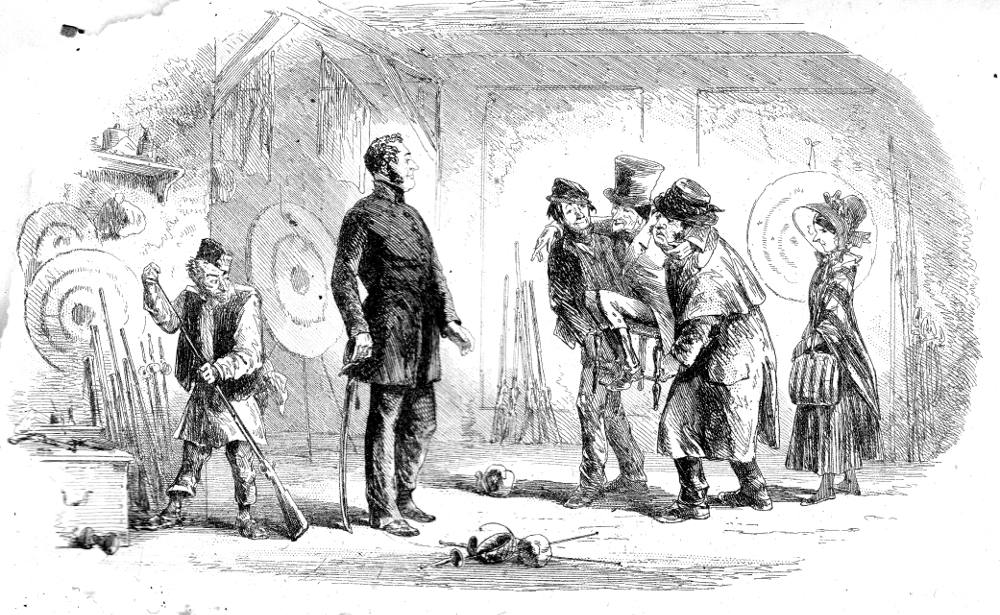 |
| "I have come down" repeats Grandfather Smallweed , hooking the air towards him with all his ten fingers at once to once, "to look after the property".(*) |
Scan credit: George P. Landow at Victorian Web
Stephen Hester will step down from the leadership of RBS this month with a payoff thought to be in the region of £1.6m, according to Wiki, nearer to £6m if you include share options (according the The Mirror). He earned around £1.2m a year, making £6m over his term in the seat, and took an additional £6.5m in bonuses and pension payments in 2010, after which people started to put pressure on the new government to DO something.
Only, since Stephen Hester was a Conservative donor, they didn't try very hard and as for the Lib Dems, Vince Cable decided to ignore the occasional story he heard, adopting his standard position of hazy old duffer who cannot be expected to remember anything or grasp the significance of it if he does.
At the time of the previous story which featured Hester, it was felt that I had been rather hard on a man who was not in direct control of the insurance group and anyway, was turning round a failed bank. Furthermore a man who knew the difference between right and wrong and had said so in a video interview to the Telegraph. (May be behind a paywall, depending on your usage)
"It is an extreme example of a selfish and self-serving culture which the whole banking industry is tagged with," he said, adding that it was the board's job to ensure that sort to behaviour has no "validity in the future".It recently emerged that RBS used another special group of which Hester will no doubt claim to have come over all Vince Cable about, the Global Restructuring Group, GRG, with thanks to Felix Salmon at Reuters who has presented the story clearly. RBS foreclosed loans because it could get more immediate value out of stripping the assets the debtors had put their lives in to. Using the GRG group, it engineered defaults to give itself permission to help itself to the fruits of other people's labour, selling them a knock-down prices to its own subsidiary, West Register.
Perhaps unusually in this day and age, the story seems to have bubbled under with the debtors being unable to form a coherent pressure group. Possibly that is because it is very difficult to distinguish, from the outside, a good business being pushed under by the bank and a bad business which should be stopped before it gets any worse. When stories started emerging in July 2013, RBS and Hester coolly said they could not comment on individual cases, implying that debtors must all be unreliable complainants - and no doubt some of them are. The Tomlinson Report draws together the method the bank used. Lawrence Tomlinson also credits an investigation by the Sunday Times and the work of Sir Andrew Large.
Many in the banking trade have counted on this story being too convoluted to grasp . They have forgotten that Mr Dickens already explained it in 1853. This year was the 160th anniversary of the conclusion of Bleak House.
In the illustration above, the old payday lender Smallweed has extended rolling credit to Captain George who has used it to buy a shooting gallery. This barely makes enough to keep him and an assistant in tea and bread but earns just enough to keep paying Smallweed his interest. Probably it is a bad business but George is making his payments and trade might improve.
It then transpires George has an asset he was not aware of; he holds a letter from a late friend which can be used as a sample of handwriting to positively identify the writer of other documents and letters. Smallweed knows to whom that sample has value and he wants to be rewarded for brokering the deal. The only trouble is, George takes advice and is certain that he does not want to be involved.
Smallweed then brings pressure on him because the loan is not secured just against George's own person but the property of his friend Mr Bagnet. Smallweed demands full repayment, knowing full well that George has no way to do it and must therefore surrender the letter for inspection. Which he does.
If people are capable of following the plot of Bleak House and how Smallweed manipulates George to get what he wants, they are capable of understanding what RBS was doing. Shake me up, Judy.
........................
(*) Yes, I know Smallweed says this when he goes to Krook's house rather than George's shooting gallery, but the sentiment fits best.
Friday 6 December 2013
Social Workers have too much free time
....the chief executive of the British Association of Social Workers Bridget Robb says the report on social work in the UK offers an insight into how stressed, overloaded and under-resourced social workers have become.Source ITV News
This week Essex social workers, a health trust and members of the judiciary have found themselves side-tracked by having to deal with the outrage over their handling of an unwell Italian woman.
The bare bones as everyone knows are that a visiting Italian woman had an episode associated with a condition of being bi-polar. The police took her to a mental hospital which sectioned her although she explained she was a foreign national and said she wanted to go home. Bi-polar people are irrational when they are distressed, but then so are some people who are not bi-polar. This is not the same as lacking the capacity to give consent, the capacity may fluctuate. Besides, going home seems pretty rational to me. Best place for her.
She was pregnant but that makes no difference in this instance. What matters is that a foreign national who had committed no crime was detained against her will. The only thing the Health Trust should ever have done was stabilize her and put her on a plane home, with an escort if necessary, after liaising with the Italian authorities. Their citizen, their problem. She was not exercising her EU rights to remain in Britain.
Instead, for reasons which have yet to be disclosed, the hospital 'looked after' her for the next ten weeks from 13 June 2012 to 23 August 2012 . Ten weeks is ample time to arrange a short plane ride. Her right of free movement, also established in EU law, was interfered with. She had a right to be ill where it suited her, not the Health Trust. She now says that she was shocked and had no inkling that she would be forced in to surgery. No, but somebody knew because the Health Trust did nothing until she was ripe (39 weeks), then they applied for emergency powers, giving the judge (Mostyn M-J) the bum's rush late one afternoon. Mostyn agreed to let them act without seeking her consent on the pretext that she lacked capacity to consent and that it was in her best interests. That is, he took at veterinary approach . He did not check thoroughly for capacity or lack thereof.
The Trust is going to have to explain why it chose to do that and how it colluded with Essex cc social workers to give the judge no time to make an order returning her to Italy.
We have many British citizens and traumatised refugees who may need ten weeks adult in-patient care. Towards them we have a humanitarian duty. Instead we have spent hundreds of thousands of pounds on in-patient care, lawyers, social workers and court time to hold someone who could, and should have been treated in their own country.
Our humanitarian duty to this lady was to escort her home safely as quickly as possible, which is where she wanted to go. You do not need a degree in law or social work to see this. Nor do you need to be a whackjob conspiraloon to ask "Why were they holding on to a foreign national whom they were anxious to get rid of after the birth?"
Surely it is obvious that if you say you are snowed under with child protection work, what you do is send home those who want to go and who can be cared for by their own social service departments,. Essex CC knew that the baby is half-Italian, half-Senegalese and that her mother, father, siblings and grandparents - the whole extended family - are in Italy. It may be she will be adopted, but it is in her interests to be adopted in Italy because that is where her real family is. It is where she is from.
The judges, being separate, do not notice they are being hustled. Although Mostyn M-J agreed to hear the interim care application himself, the social workers obtained a different judge, Parnell, to hear it. That way they controlled what Parnell was told. Classic control dynamic; limit the extent to which the marks can compare notes. Later, Judge Newton recorded that he did not understand the background which had been obscured from him. He did not ask himself 'why is this obscure?'.
Call me what instrument you will, though you can fret me, yet you cannot play upon me is what the judges should have said. Only they could be, and were.
Their final step will be to get Judge Munby to reluctantly agree that since the child has been attached to the foster carers for so long and speech will now be well-advanced at 15 months, the social workers will be allowed to continue as per the adoption order. He will find it very hard to resist this argument.
I call bullshit. Social workers have got too much free time and they've been using it to do baby-selling, using our dollar to fund the farming operation. Plus, they've now made sure that any pregnant or post-natal woman feeling a bit dicky will not call her doctor in case they end up snatching the kid, so we can look forward to an increase in suicides. The correct name for this is 'anti-social work'.
If the social workers don't like that conclusion, perhaps they should behave differently.
Silver lining though - it is now published right round the globe that if you come to Britain they'll knock you on the head and nick your baby and tell you it's legal. The BNP itself could not have come up with a finer deterrent to immigration.
Monday 2 December 2013
TOWIE
 |
| A load of stinking offal |
A foreign woman who was raped whilst in hospital is being told that she cannot take action because the rapist claims that he was legally obliged to fuck her and that it is alright as she's a nutter and anyway, they took the precaution of knocking her out first.
The woman was in Britain for a two week training course and became temporarily confused by the parking system at Stanstead Airport. She called the traffic police who concluded she was a hysterical Latino type and that she should go to hospital to calm her down.
The woman was detained by the hospital - which turned out to be psychiatric unit - because there were hardly any other crazy people from Essex to deal with. The woman wanted to go home, but as she apparently lived in an uncivilized place called Italy, the hospital continued to define her as an utter nutter and hung on to her claiming that it was all for her own good. You cannot trust these foreign types, Mafioso and so forth.
After about five weeks it became apparent that all she really needed was a good seeing-too, probably a lesbian, but it needed to be all legal. Normally no one in a theraputic relationship with a patient is allowed to have sex with them, so a court order would be necessary.
Essex Social Services and the lawyers appointed to 'see to' the woman went to the Court of Protection where they got Mr Justice Mothballs (adulterer and known as 'Mr Payout' when he was divorce lawyering) to agree that it was definitely in her interest to have a good porking, sort her out no end, women, who'd have them, by the way, did I tell you my wife of 30 years, the cow, is trying to insist I have to pay her money if I want to trade her in for a younger model...not that I have any problem with women, do I ladies?
Mr Justice Mothballs signed the order and further agreed that she should be shoved on a plane as soon as possible thereafter since that was what she had been requesting for the previous month, but she couldn't possibly be allowed to go without being shown the error of her ways.
There was a slight difficulty in finding a normal heterosexual doctor who actually wanted to fuck an unconscious and thereby unconsenting woman, regarding that as unethical and disgusting no matter what the stupid paper said, but eventually a psychopathic doctor was found who was running for a job at Stafford Hospital. He found the erotic possibilities of the court order and an entire theatre team watching him stick it up her, legally, without consent, an amazing aid to performance. Apparently the videos are to be put on Youtube.
The woman woke up back in Italy, walking funny and finding a knife-wound to her belly, suggesting that the doctor had fucked her in an unusual manner, more like something out of Stephen King. She wondered if she had been impregnated and was going to give birth to the devil but it turned out that precisely the opposite had happened and the doctor had collected tissue at the request of Essex Social Services. Social workers claimed she is much better now that she had experienced a Real Man but, perhaps surprisingly, she claims she does not. Told you, prob'ly a lezzer, the ungrateful bitch.
The woman is currently undergoing explorations to see if her ovaries are still there or
This was confirmed by Judge Noballs at Chelmsford Crown Court, where the woman brought a suit against her treatment. The judge said that the woman certainly sounded sane now, but she might go all funny and foreign at any moment and anyway, she could not possibly be interested in the whereabouts of a five-pound tumour which was now being used in research or broken for spares or something.
An interesting question from this is how was the tissue recorded? Normally tumours of this size have to be formally recorded and in particular the name of the host must be on it, but due to the court order and the rape, this tumour was less traceable than even a calf born in a dairy herd. Intriguing.
Essex Social Services have reminded people that they are very keen to protect any young women who think they might be feeling a bit panicky. You are invited to ring them to report any you may know of, particular if the young lady is fit and of child-bearing age.
.....
Bloggeratti
Ambush Predator
Autonomous Mind
Counting Cats
Longrider
Tim Worstall
Quiet Man
Birthrights - legal briefing by Elizabeth Prochaska
John Hemming MP. Careful visiting the UK whilst pregnant.
John Hemming MP. Bipolar UK issue statement in support of mother
John Hemming MP Italian Mother: Statement 1
John Hemming MP Italian Mother : Statement 2
Update: according to John Hemming the case has been transferred from Chelmsford to the High Court where it will be heard by the President of the Family Division, Sir James Munby. Sir James gave a recent address on the reforms he hopes to see.
Mr Justice Mothballs has previously made his opinion of Sir James Munby clear by naming seven pet pigs after him. Fat lot of good it is being educated at Amplesides, complaining about the secularists and describing oneself as a Catholic if you are going to sign orders to slice up a woman to get to her baby - and probably an Italian Catholic woman - in secret.
ITV Coverage
Essex County Council timeline
(Sorry, above link mysteriously 404, will restore data on new link).
Court of Protection - orders
Adoption Ruling of February 2013
Thursday 21 November 2013
Perhaps we should stop calling them paramedics?
In May 2007 an ambulance was called to a young woman, Sarah Thomas, who was having trouble breathing. Miss Thomas was recovering from a brain tumour and was lapsing in and out of lucidity, but she knew she was ill and called the ambulance at 1am. She was known to have diabetes and to have had her pituitary gland removed after surgery for the tumour. She also thought she had a gastric infection as her father had also experienced a tummy bug a few hours earlier.
You do not need to be a paramedic to know that if someone's brain is being treated and they are calling an ambulance, and they can't breath reliably, are dehydrating and have diabetes and no pituitary gland, the place to go is a hospital and let the grown-ups deal with it. Common sense tells you that this is way out of one's own league.
Instead, the paramedics carried out an incompetent assessment and persuaded the parents to sign to say that they had done their job. They persuaded the patient not to go to hospital. The parents were there and were fully able to explain that their daughter had recently had brain surgery. Note that Miss Thomas, a 30 year old woman, was apparently not in a condition to sign, which is another clue that she should have been removed to a hospital. Had she gone to hospital the doctors and nurses would have been in a position to give her the stabilizing treatment she needed.
After only six years the coroner managed to return a narrative verdict in February 2013, in which he noted discrepancies between the accounts given by the ambulance crew and the family. He gave the medical classification for the death
After a further ten months disciplinary action was finally taken. The paramedics were removed as it became clear that the 'discrepancy' was more than just two different view of the situation. The disciplinary panel revealed that not only had they failed to carry out a proper assessment but they then
But why did they not do the the obvious thing and just take her to the hospital that night?
Below the line in the Mail (usual caveats) is an interesting comment:
You do not need to be a paramedic to know that if someone's brain is being treated and they are calling an ambulance, and they can't breath reliably, are dehydrating and have diabetes and no pituitary gland, the place to go is a hospital and let the grown-ups deal with it. Common sense tells you that this is way out of one's own league.
Instead, the paramedics carried out an incompetent assessment and persuaded the parents to sign to say that they had done their job. They persuaded the patient not to go to hospital. The parents were there and were fully able to explain that their daughter had recently had brain surgery. Note that Miss Thomas, a 30 year old woman, was apparently not in a condition to sign, which is another clue that she should have been removed to a hospital. Had she gone to hospital the doctors and nurses would have been in a position to give her the stabilizing treatment she needed.
After only six years the coroner managed to return a narrative verdict in February 2013, in which he noted discrepancies between the accounts given by the ambulance crew and the family. He gave the medical classification for the death
Mr Philip Rogers said he would record the medical cause of her death as:
1a circulatory collapse as a result of gastroenteritis, with
part two, panhypopituitarism and adrenal insufficiency.
Yes it is gross failing and obviously so. They did not carry out a competent assessment. They persuaded the patient and her parents not to go to hospital when it was apparent that the patient was losing the capacity to take decisions at all. If she had called a cab instead of an ambulance, Miss Thomas would have stood a better chance of survival because at least the cab driver would not have played at being a doctor.
After a further ten months disciplinary action was finally taken. The paramedics were removed as it became clear that the 'discrepancy' was more than just two different view of the situation. The disciplinary panel revealed that not only had they failed to carry out a proper assessment but they then
colluded to fabricate a patient record.They tried to cover up the error.
But why did they not do the the obvious thing and just take her to the hospital that night?
Below the line in the Mail (usual caveats) is an interesting comment:
Unfortunately, ambulance staff have been pushed towards not taking people to hospital to ease pressure on the hospitals. This practice of using them as "poor mans doctors" is widespread because you have almost no chance of getting doctors out in the evening. .......Increasingly the ambulance service is led away from its primary duty ,which is to promote life by giving aid and getting you to hospital.This is an unfortunate case but is one that we will probably see more of in the future unless someone" grasps the nettle" and gets back to basics.The names of the paramedics are not relevant here and are available from the links. They certainly made a willful and serious mistake and compounded that by trying to fiddle the records. The latter, in my view, should be a criminal matter and not just a disciplinary one.
Sunday 10 November 2013
Remembrance 2013
 |
We Will Remember Them |
Compromise.
Much has been written about the misunderstanding of the poppy.
Locally, churches are holding services this evening to pray for peace in order to give people of a different perspective a way to express an earnest desire that bloodshed be averted.
Friday 1 November 2013
A free and pluralistic media to sustain European democracy
I can't face wading through all this so let's concentrate on one feature:
Recommendation:
There should be a provision of state funding for media which are essential for pluralism (including geographical, linguistic, cultural and political pluralism), but are not commercially viable.
The state should intervene whenever there is a market failure leading to the under‐provision of pluralism, which should be considered as a key public good
Translation:
Tax payers will be obliged to fund dreary publications such as pro-EU propaganda, union self-congratulatory bumf, anything vaguely leftist such as the extinct Spare Rib magazine, and perhaps a whinge-sheet by groups such as Hacked Off.
It is obviously a market failure that people don't rush out and spend their own money on this, so we'll have to have it delivered to their houses anyway, in defiance of the EU rules about not creating waste. It's not waste when we do it.
Pluralism does not mean funding the UKIP newspaper or anything which puts forward the view that the state has a primary over-riding duty towards its own citizens.
This is all to show how democratic the EU is, even though it isn't.
Friday 18 October 2013
Who writes these adverts?
The Story of Heston's Marvelous Mince.
After that 'magic bean' recipe with the cockerel's gonads, I'm not sure I want to know this.
Oh well, if you insist.
After that 'magic bean' recipe with the cockerel's gonads, I'm not sure I want to know this.
Oh well, if you insist.
Sunday 29 September 2013
Ken Wallis - A Celebration
To Old Buckenham Airfield for a celebration of the life of Our Ken - Wing Commander Kenneth Horatio Wallis MBE, DEng (hc), Ph.D (hc), CEng, FRAeS, FSETP, FlnsTA(hc), RAF (Ret'd) who died on September 1st 2013.
Amongst the extraordinary feats in his life was getting an obituary in The Stage since he had worked as a stuntman doubling for Sean Connery in You Only Live Twice, where he did not just fly the autogyro but also built and modified it for filming.
In an age of tarnished celebrity Ken Wallis was the real deal; a man who deserved to be famous for the valour of his life and his achievements. Amongst those was a determination to go his own way but always making friends. No matter how tired he might be, Wallis was unfailingly polite and took care that every person he spoke to became a potential ally to aviation, engineering and innovation but always with a regard for the traditions which he knew his friends valued.

He knew everybody and everybody knew him. As a result, when Old Buckenham airfield - where he was member 007 - suggested holding an appreciation day, the event snowballed.

An estimated 500 cars attended as spectators with about another 200 classic cars putting on a display of automotive engineering which spanned his lifetime.

At least 80 landing slots were booked for visiting aircraft which in the end became so numerous that the organizers had to ask them to come by car - they had run out of capacity to get everyone landed by the time the family wanted to make an address to the crowd of around 2,000, filling the hangar and spilling out over the fields.
In recognition of his development of the autogyro and all the stories he told about them, as many as possible flew in and lined up by Little Nellie's hangar.

We were blessed with a bright, warm and breezy day to give thanks for the life of Wing Commander Ken Wallis MBE.
News from other guests: Eastern Daily Press, Old Buckenham Blog Norwich Evening News
Amongst the extraordinary feats in his life was getting an obituary in The Stage since he had worked as a stuntman doubling for Sean Connery in You Only Live Twice, where he did not just fly the autogyro but also built and modified it for filming.
In an age of tarnished celebrity Ken Wallis was the real deal; a man who deserved to be famous for the valour of his life and his achievements. Amongst those was a determination to go his own way but always making friends. No matter how tired he might be, Wallis was unfailingly polite and took care that every person he spoke to became a potential ally to aviation, engineering and innovation but always with a regard for the traditions which he knew his friends valued.

He knew everybody and everybody knew him. As a result, when Old Buckenham airfield - where he was member 007 - suggested holding an appreciation day, the event snowballed.

An estimated 500 cars attended as spectators with about another 200 classic cars putting on a display of automotive engineering which spanned his lifetime.

At least 80 landing slots were booked for visiting aircraft which in the end became so numerous that the organizers had to ask them to come by car - they had run out of capacity to get everyone landed by the time the family wanted to make an address to the crowd of around 2,000, filling the hangar and spilling out over the fields.
In recognition of his development of the autogyro and all the stories he told about them, as many as possible flew in and lined up by Little Nellie's hangar.

We were blessed with a bright, warm and breezy day to give thanks for the life of Wing Commander Ken Wallis MBE.
News from other guests: Eastern Daily Press, Old Buckenham Blog Norwich Evening News
Saturday 21 September 2013
Garlic at the Equinox
Over at Fahrenheit211 a personal explanation of why a person would spend precious time tracking stories with no financial reward and, it sometimes appears, little effect on the world.
In response I give you.....garlic.
Mr Raft has just harvested several large bulbs which are being used, stored, admired and generally enjoyed. There will be garlic with our Yuletide dinner. I might see about putting a few prepared cloves in to oil as that is another way of storing them.
They came to be planted as a result of a suggestion by another writer known for his sunny disposition; the unmissable Mr Ishmael. He said out that planting garlic is easy - you just put a clove in the ground and wait. He also mused that preparing rhubarb in syrup was intrinsically rebellious, reminding us of skills which we once had.
Mr Raft has also let some bulbs go to seed for the next generation so I'll pop them in the earth now in the belief and expectation that there will not just be this autumn but another when the wheel of the year has rolled all the way round, through all those moons.
Blogging also has to be about optimism, a belief that any small act of defiance is better than none.
H/T JuliaM at Ambush Predator for the link to Fahrenheit211
In response I give you.....garlic.
 |
| Seeds and seed bulbs harvested for next planting |
Mr Raft has just harvested several large bulbs which are being used, stored, admired and generally enjoyed. There will be garlic with our Yuletide dinner. I might see about putting a few prepared cloves in to oil as that is another way of storing them.
They came to be planted as a result of a suggestion by another writer known for his sunny disposition; the unmissable Mr Ishmael. He said out that planting garlic is easy - you just put a clove in the ground and wait. He also mused that preparing rhubarb in syrup was intrinsically rebellious, reminding us of skills which we once had.
Mr Raft has also let some bulbs go to seed for the next generation so I'll pop them in the earth now in the belief and expectation that there will not just be this autumn but another when the wheel of the year has rolled all the way round, through all those moons.
Blogging also has to be about optimism, a belief that any small act of defiance is better than none.
H/T JuliaM at Ambush Predator for the link to Fahrenheit211
Subscribe to:
Posts (Atom)